Guide - Paint Protection Film
A Track Pack extends full-front film to the other impact zones: rocker panels, lower doors, rear-quarter stone guards and behind the rear wheels. It’s named for track day…
The short answer: A Track Pack extends full-front film to the other impact zones: rocker panels, lower doors, rear-quarter stone guards and behind the rear wheels. It’s named for track days but bought mostly by wide-tire, low-car and highway drivers.
In this guide
Why "track" coverage existsWho should book itWhat it costsWhat it pairs withBeyond the track: Lowcountry jobs that need side coverageFitting order and what a Track Pack day looks likeOn a track, tires throw rubber and grit at the car’s sides and quarters. On Charleston roads, the same physics applies at lower intensity: wide rear tires fling debris into the rear quarters, and low rockers collect everything the road sheds. The damage pattern - peppered rockers and quarters - is identical.
Sports cars and performance EVs (wide tires, low stance), trucks that see gravel and job sites, and anyone whose current car shows the tell-tale quarter-panel peppering. Look at your car’s rear quarters today: if they’re speckled, you’re a Track Pack driver.
Track Pack coverage is priced by vehicle over the full-front base - most fall in the $2,600–$3,400 range. As always: exact quote after we see the car (or its year/make/model), confirmed before work.
Coating over the filmed and unfilmed panels alike - the film handles impacts, the coating handles gloss and washing. The Track Pack + flagship coating is the serious-driver standard in this studio.
Most Track Packs we fit never see a circuit. They go on cars and trucks doing recognisably local work. Gravel drives and unpaved side roads off Highway 17 and out towards Johns Island and Wadmalaw throw stones sideways into rockers and lower doors at ordinary speeds. Boat ramps add grit, wet sand and trailer manoeuvring in tight spaces. Construction and landscaping trucks work around aggregate, tools and loading zones all week, and their lower panels show it within a year.
Weekend use counts too. The drive to a Cars and Coffee meet or a mountain run with a club means hours behind other wide-tyred cars, which is precisely the debris environment the package was named for. Even beach traffic plays a part: sand and shell fragments on coast roads act like fine grit at speed, sanding rockers and the paint ahead of the rear wheels. Look at the lower half of your current vehicle before deciding the package is for racers. If the sills are rough to the touch and the quarters are speckled, your driving already includes track-pack conditions - the track is simply optional, and for most Charleston owners, entirely theoretical.
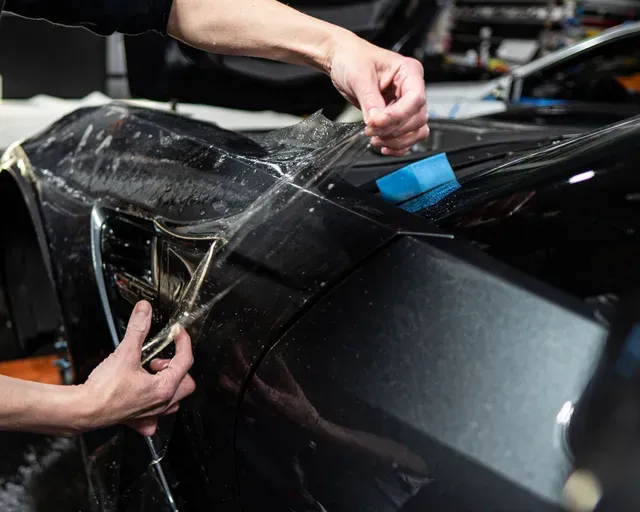
A Track Pack builds directly on the full-front install, so the workflow starts identically: wash, decontamination, inspection under correction lighting, and correction of every panel to be filmed - including the rockers and quarters, which often need more attention than the hood because they have lived in the debris stream unprotected. Patterns for the additional panels are computer-cut for the exact vehicle, with the rear-quarter stone-guard shapes following the body’s flare rather than a generic rectangle.
Fitting the side panels is slower work than the front. Rocker panels curve under the car, collect the most embedded grime, and demand meticulous cleaning before film can bond invisibly; rear quarters involve compound curves around the wheel arch. Expect the car to be with us longer than a standard full-front booking - we will confirm the window when your build is quoted, and most Track Pack builds fall between $2,600 and $3,400 depending on the vehicle. The final check is a full walk-around under the correction lights, edges inspected panel by panel. Collect the car with the aftercare routine explained for the lower panels specifically, because they will keep living the hardest life on the vehicle - now with armour on.
Yes. If your full front is already fitted, the rocker, lower door and rear-quarter panels are added as their own install after correction and inspection of those panels. The film line is matched so the finish and healing behavior stay consistent. Many owners do exactly this after their first season, once they have watched where their car actually takes damage.
They chip constantly - they sit directly in the stream of everything the front tires throw backwards, including gravel, sand and debris. Run your hand along an unprotected rocker after a year of Charleston driving and it feels like coarse sandpaper. It is the most under-protected panel on most cars, which is why the package exists.
Usually, yes. Towing adds exactly the exposures the package covers: gravel and ramp work at the boat launch, debris thrown by both the truck’s own wide tires and the trailer’s, and long I-26 hauls behind other traffic. Full front plus rockers and quarters protects the panels that towing life marks first, for considerably less than repainting them later.
Key takeaways
Track Pack = full front + rockers, lower doors, rear quartersWide tires and low cars throw debris at their own quartersMost builds land $2,600–$3,400, quoted exactlyPairs with full-car coating for the complete answerKeep reading
Getting it done locally: see Paint Protection Film in Charleston or Paint Protection Film in Mount Pleasant - same studio standard, priced for your exact car.
Send us the year, make and model - you’ll get an exact quote and the next studio slot.