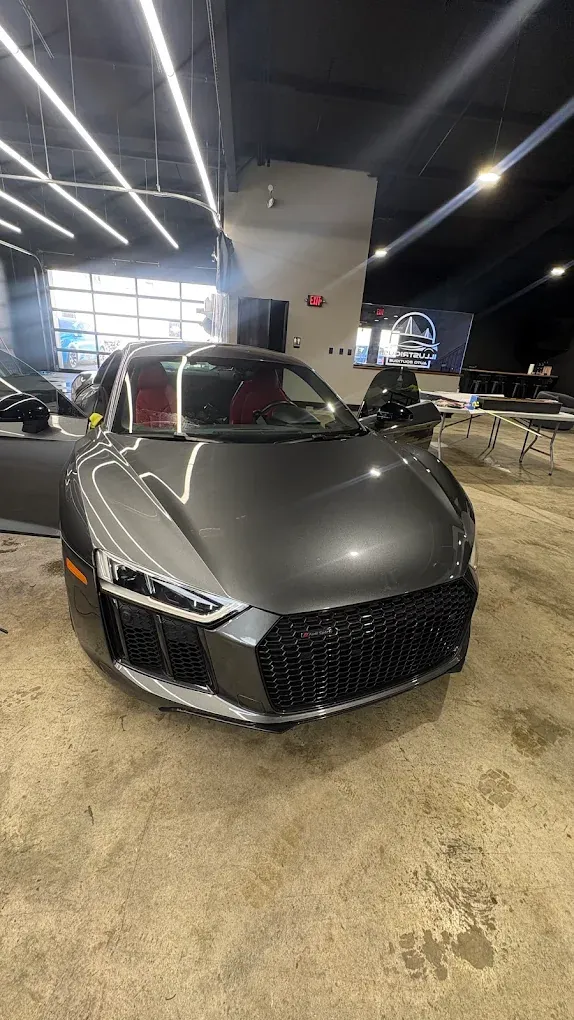
Guide - Paint Protection Film
Stealth PPF is film with a satin/matte finish: applied over gloss paint, it transforms the car’s look completely while protecting it; applied over factory matte paint, it…
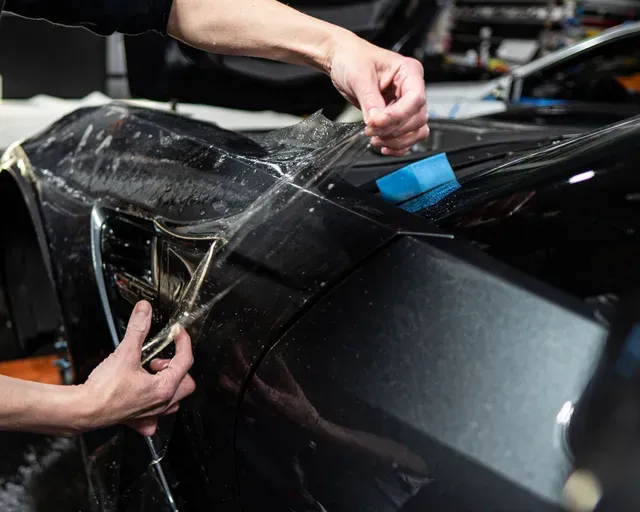
The short answer: Stealth PPF is film with a satin/matte finish: applied over gloss paint, it transforms the car’s look completely while protecting it; applied over factory matte paint, it protects a finish that can’t be polished or repaired conventionally.
In this guide
Two jobs, one filmCare differencesCost and coverageSee it firstWhich colors transform best - and which need a daylight testLiving with satin: fingerprints, shiny spots and repairsTransformation: any gloss color becomes a deep satin version of itself - the "stealth" look - fully reversible at removal. Protection: factory matte and satin paints (an expensive option on many cars) cannot be spot-repaired or polished; a scratch means repainting the panel. Matte PPF is effectively mandatory for those finishes.
Matte film is cared for like matte paint: no waxes or gloss products, matte-safe wash products, no polishing. The self-healing topcoat still works. We’ll hand you the matte-specific routine - it’s simple, just different.
Stealth builds are full-body by nature (a satin panel next to a gloss one is not a look) - from $6,499 by vehicle. Partial stealth accents (hood, roof) are the exception and look deliberate when planned.
Satin changes how a color reads - deeper, moodier, less reflective. We keep finished examples and film samples; judge it on a panel, in daylight, before committing the car.
Stealth film does not change a color’s hue; it changes how light leaves the surface, and colors respond differently. Deep colors gain the most drama: blacks turn properly menacing, dark blues and greens develop a rich, liquid depth, and the popular grays go an unmistakably modern flat tone. Mid-tone reds deepen towards a satin crimson that photographs beautifully. These are the transformations owners rarely regret.
The colors that demand a daylight sample are the pale ones. White under satin film reads as a soft, almost ceramic matte - some owners love its stormtrooper understatement, others find it flat, and neither reaction is predictable from a screen. Light silvers can lose their metallic sparkle almost entirely, because sparkle is a gloss phenomenon. Bright, playful colors - yellows, vivid oranges - mute noticeably, trading pop for mood. Our rule is absolute: no full stealth build is booked from photographs alone. We apply a sample to your actual panel, you view it in full sun and in shade, and you live with the idea for a day. A finish you will look at for a decade deserves that one honest afternoon of judgement.
Satin film has two quirks every owner should know before, not after, the first month. The first is fingerprints: skin oils sit visibly on a matte surface, especially around door handles and the boot lip. They are not damage - a matte-safe detail spray lifts them in seconds - but owners expecting gloss-car invisibility find the first week surprising. Keep the spray in the door pocket and it becomes a ten-second habit.
The second quirk is the shiny spot. Rubbing, polishing or an abrasive mitt can burnish a small area of satin film glossier than its surroundings, and unlike gloss film, a satin panel cannot be polished back to uniform - the fix is replacing that section. This is why the matte routine forbids waxes, gloss dressings and machine polishing, and why we hand stealth owners their product list. The good news: the self-healing topcoat still handles light swirls and wash marks exactly as gloss film does, and ordinary road damage is handled by section replacement with the paint beneath untouched. Satin asks for slightly different habits, not harder ones - and in exchange, your car will be the only one at the meet that looks like yours.
Yes - that is one of its two main jobs. Over a factory matte finish, the film preserves the original sheen while armouring a surface that cannot be polished or spot-repaired. A scratch in bare factory matte usually means repainting the panel; the same scratch in film means replacing a section. We match sheen to paint at the sample stage.
Fitted in the same film line, a replacement panel matches the sheen of its neighbors far more reliably than aged vinyl or repainted matte paint ever does. Sheen consistency is a large part of why stealth film owners choose film over a matte wrap. Keep your install records so any future section is ordered in the identical product.
Full-body clear film starts from $5,999 and stealth builds from $6,499, with the exact figure set by the vehicle. The difference reflects the film itself and the full-body fitting - a stealth transformation cannot stop at the front wings. Partial satin accents, such as a hood or roof, are quoted individually when the design is deliberate.
Key takeaways
Stealth film transforms gloss → satin, reversiblyFactory matte paint can’t be polished - film is near-mandatoryMatte care: no wax/gloss products; routine providedFull-body builds from $6,499; judge samples in daylightKeep reading
Getting it done locally: see Paint Protection Film in Charleston or Paint Protection Film in Mount Pleasant - same studio standard, priced for your exact car.
Send us the year, make and model - you’ll get an exact quote and the next studio slot.