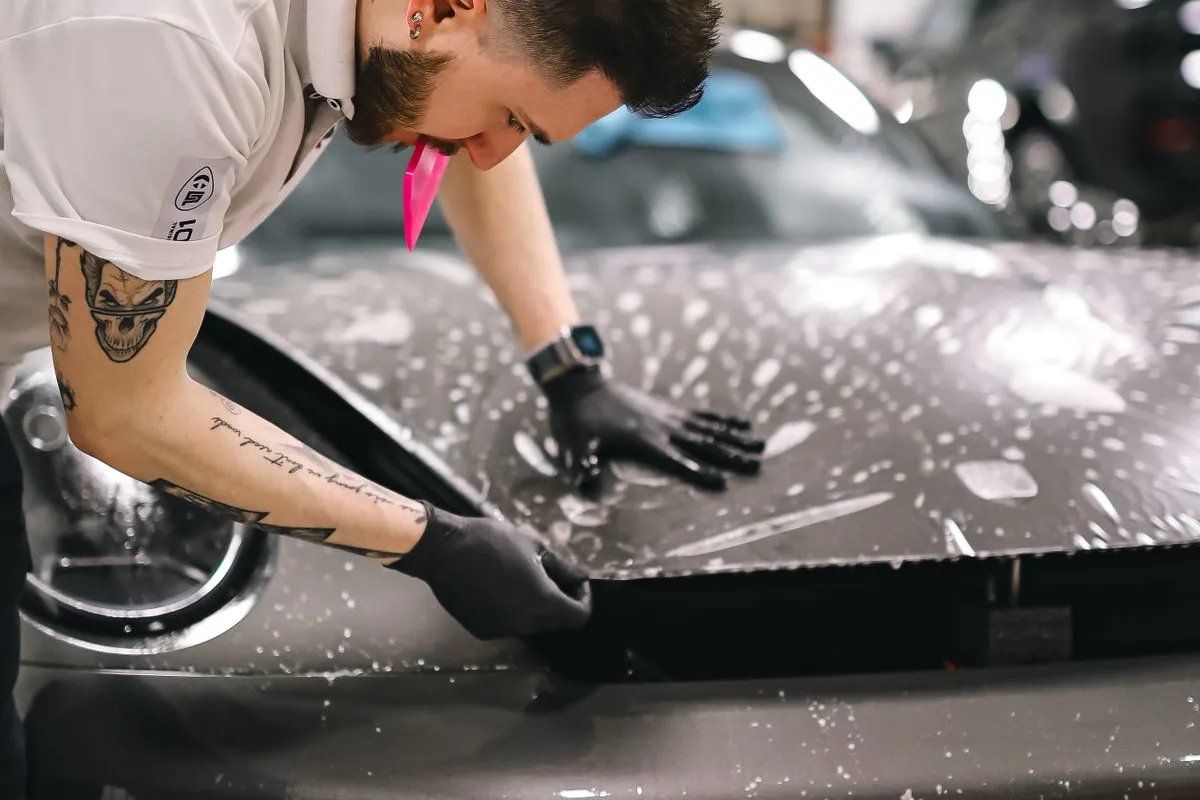
Guide - Paint Protection Film
Self-healing film has an elastomeric topcoat that softens and re-flows when warmed - by sun, warm water or engine heat - closing light swirls and wash marks on its own. D…
The short answer: Self-healing film has an elastomeric topcoat that softens and re-flows when warmed - by sun, warm water or engine heat - closing light swirls and wash marks on its own. Deep cuts through the film don’t heal; that section gets replaced, and the paint beneath stays perfect.
In this guide
The mechanismWhat healsWhat doesn’tHelping it alongHeat, time and limits: how healing really behavesTesting healing at home without damaging anythingThe topcoat is a polymer with a kind of memory: at rest it’s solid; warmed, its chains mobilize just enough for the surface to level itself. A swirl is a tiny valley in that layer - heat lets the material settle back flat. It’s materials science, not magic, and it works thousands of times over the film’s life.
Wash swirls, light brush marks, fingernail scuffs around door handles, minor abrasion from clothing and bags. The daily texture that makes unprotected cars look dull accumulates on film - then quietly erases itself on a sunny Charleston afternoon.
A stone strike that cuts the film, a key scratch, a parking dent. Those are the film sacrificing itself as designed: the panel’s film is replaced, the paint never knew. Section replacement is straightforward and far cheaper than paint repair.
Park in the sun, or pour warm water over the area. Don’t use heat guns aggressively at home - the sun here is honestly sufficient, and patience is free.
Healing is not instant and it is not unlimited, and understanding its pace stops most disappointment. In strong Charleston sun, light wash swirls in the topcoat typically level within minutes to an hour of the panel warming. On a cool, overcast morning the same marks may sit until the panel warms - engine heat works faster than air on a door. Warm water poured over a panel speeds the process deliberately, which is why we demonstrate healing that way in the studio.
Depth is the hard limit. The topcoat is a thin layer; marks confined to it heal completely, while anything cut through into the film body stays, because no material remains to re-flow into the gap. Repetition has a softer limit: scrub the same spot with a rough brush weekly and the topcoat eventually stops recovering cleanly - one more reason filmed cars deserve soft mitts. Think of healing as the film forgiving ordinary life - wash texture, light brush contact, fingernails at the handle cups - thousands of small events across its decade. It was never designed to forgive a key, a stone at 70 mph, or a scouring pad, and no honest installer will claim otherwise.
If you want to see your film work, do it the safe way. Choose a filmed panel with visible light swirling - the area around a door handle is ideal. Wash and dry that panel first, so you are looking at marks in the film rather than dirt on it. Photograph it in direct light, then simply park the car in the sun for an hour and photograph the same spot from the same angle. On a warm day the difference is usually obvious.
To speed things along, pour a jug of warm - not boiling - tap water slowly over the marked area. Boiling water is unnecessary and can shock adhesives at edges; the film responds perfectly well to temperatures your hand can tolerate. Never use a heat gun or a lighter; concentrated heat can gloss, distort or lift film, turning a demonstration into a replacement panel. If a mark survives a warm afternoon unchanged, it is telling you it sits deeper than the topcoat. That is useful information, not a failure - bring the car by and we will tell you honestly whether it needs heat, a polish or a panel replacement.
There is no fixed counter - the topcoat re-flows while its material remains intact, which for wash marks and light scuffs means effectively the film’s whole life. Repeated abrasion in one spot, or marks cut too deep, is what wears it out. With soft-mitt washing, healing at year five should feel much like year one.
Yes, just more slowly. The topcoat needs warmth to mobilize, and a cold panel in January may wait for a sunny spell or engine heat before marks level out. Charleston winters are mild enough that healing rarely stalls for long. A jug of warm water remains the reliable shortcut whenever you want to check a mark deliberately.
Sometimes, cautiously. A mark too deep for heat may respond to very light machine work by someone who understands film, but aggressive polishing thins the topcoat and kills healing on that spot permanently. That trade should only be made knowingly, panel by panel. Often the honest answer is simpler: that section of film gets replaced.
Key takeaways
Warmth re-flows the topcoat; light marks level themselvesHeals: swirls, scuffs, wash marks - the daily textureDoesn’t heal: cuts and strikes - that panel gets re-filmedSun or warm water speeds it; no tools neededKeep reading
Getting it done locally: see Paint Protection Film in Charleston or Paint Protection Film in Mount Pleasant - same studio standard, priced for your exact car.
Send us the year, make and model - you’ll get an exact quote and the next studio slot.