Guide - Paint Protection Film
Modern top-tier film does not yellow - it’s specifically engineered and warranted against yellowing for 10 years. The horror stories are real but old: first-generation fi…
The short answer: Modern top-tier film does not yellow - it’s specifically engineered and warranted against yellowing for 10 years. The horror stories are real but old: first-generation films from 15+ years ago. Today’s failures come from cheap film or poor installation, not the category.
In this guide
Myth 1: "PPF always yellows"Myth 2: "It damages paint on removal"Myth 3: "You can always see it"Myth 4: "It’s only for supercars"What actually discolours film todayHow a yellowing warranty claim actually worksEarly films used adhesives and topcoats that UV degraded into a yellow tint. Current premium films use aliphatic polyurethane with UV-stable topcoats, and manufacturers warranty against yellowing explicitly. A yellowing claim on a quality install is a warranty event, not an expectation.
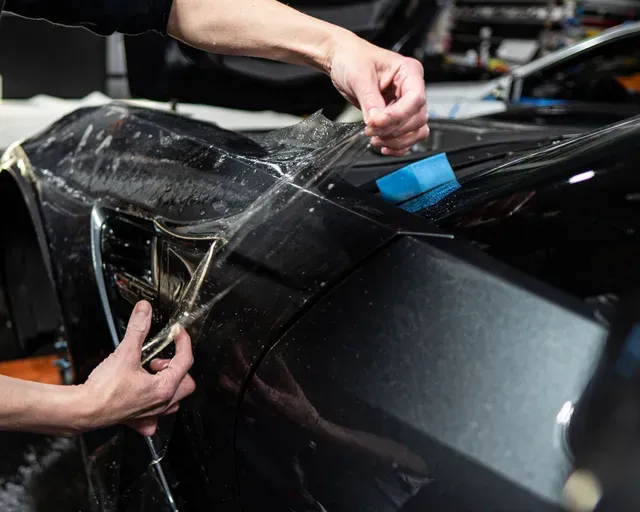
Quality film is designed to release cleanly from sound factory paint. Damage stories trace to film over fresh resprays, failing clear coat, or cowboy removal with blades and force. We assess paint before filming and remove with heat and patience.
You can see badly fitted film: short edges, dirt lines, orange-peel mismatch. Plotter-cut patterns, wrapped edges and correction-grade preparation make modern film effectively invisible - which is why exotics wear it to shows.
The cars that benefit most are daily drivers doing highway miles - exactly the cars that collect chips. A five-year-old filmed commuter front end vs an unfilmed one is the most convincing display in our studio.
On a modern premium film, a yellow cast almost never comes from the polyurethane itself. What we actually see in the studio is surface contamination sitting on top of the film: iron fallout and rail dust that rusts into orange-brown specks, tree sap and pollen baked on through a Lowcountry summer, tar mist from roadworks, and nicotine or exhaust film on cars that idle in enclosed garages. All of that lives on the surface and lifts with a decontamination wash.
True material yellowing still exists, but it belongs to budget films with cheaper adhesives and no meaningful UV package, and to very old first-generation installs. It shows as an even tint across the whole panel, worst on horizontal surfaces, and it cannot be washed off because it is inside the material. The practical test is simple: if the discolouration is patchy, speckled or follows splash patterns, it is contamination and it is cleanable. If it is uniform and the panel feels rough or chalky, the film itself is ageing. Either way, bring the car in under our lighting before assuming the worst - most “yellow film” we inspect is a dirty film, not a failed one.
XPEL Ultimate Plus carries a 10-year written warranty that names yellowing explicitly, alongside cracking, peeling, bubbling and delamination. If a panel genuinely yellows inside that term, the process is straightforward. We inspect the car under correction lighting, photograph the panel, and confirm the discolouration is in the material rather than on it - which is why the decontamination check comes first. The claim is then filed against the film’s warranty record with the install details.
An approved claim means that panel’s film is removed and replaced; you are not looking at a whole-car refit for one failed panel, and you are not paying for the replacement film or the labor the warranty covers. Keep two things from install day: your warranty paperwork and the name of the film line fitted, because “PPF” alone is not a claim. This is also where installer choice quietly pays off. A warranty is only useful if the studio that fitted the film is still there, keeps records, and will do the inspection legwork for you. Ask any installer, before you book, who files the claim and what paperwork you walk away with - the answer tells you how seriously the warranty is treated.
Yes, any tint - real or surface contamination - is far more visible against white and light silver paint, which is why white cars generate most yellowing worries. Light cars also benefit most from a decontamination wash before judging the film. Under our lighting we can show you whether the color sits on the film or in it.
Mostly, yes. Wash the car regularly so pollen, sap and road film never bake on for weeks, park out of standing sprinkler water where you can, and have the film decontaminated once a year. The film’s UV-stable topcoat handles the sunlight side of the equation; the contamination side is simply a washing habit, and it is the part owners control.
Dullness at that age is usually accumulated surface wear and contamination rather than true yellowing, and a decontamination and inspection visit will tell us which. If the material itself has failed inside the 10-year warranty, yellowing is a named claim. If it is honest end-of-life wear, we will say so and quote a refresh panel by panel.
Key takeaways
Modern film is warranted against yellowing for 10 yearsClean removal is a design feature of quality filmInvisible is achievable - with plotter cutting and wrapped edgesDaily drivers gain the most, not just exoticsKeep reading
Getting it done locally: see Paint Protection Film in Charleston or Paint Protection Film in Mount Pleasant - same studio standard, priced for your exact car.
Send us the year, make and model - you’ll get an exact quote and the next studio slot.