Guide - Window Tint
Purple color, bubbles, peeling edges, a wavy distorted rear window or failing defroster performance: any one means the film is done. Replacement is strip, clean, re-tint …
The short answer: Purple color, bubbles, peeling edges, a wavy distorted rear window or failing defroster performance: any one means the film is done. Replacement is strip, clean, re-tint - and this time, ceramic with a lifetime warranty ends the cycle.
In this guide
Reading the signsWhy it happens hereHow replacement worksDon’t DIY the stripThe five-minute driveway inspectionLiving with failing film versus replacing it nowPurple = dye breakdown from UV (dyed film’s death certificate). Bubbles = adhesive failure, often heat-driven. Peeling edges = adhesive plus mechanical wear. Distortion on the rear glass = the film’s layers separating. None of these reverse; all worsen through a Charleston summer.
Heat and UV are the two killers, and this coast supplies both at championship level. A film rated "fine" in Ohio dies young in South Carolina. It’s the strongest argument for ceramic and a lifetime warranty: the replacement cycle is a choice, not a fate.
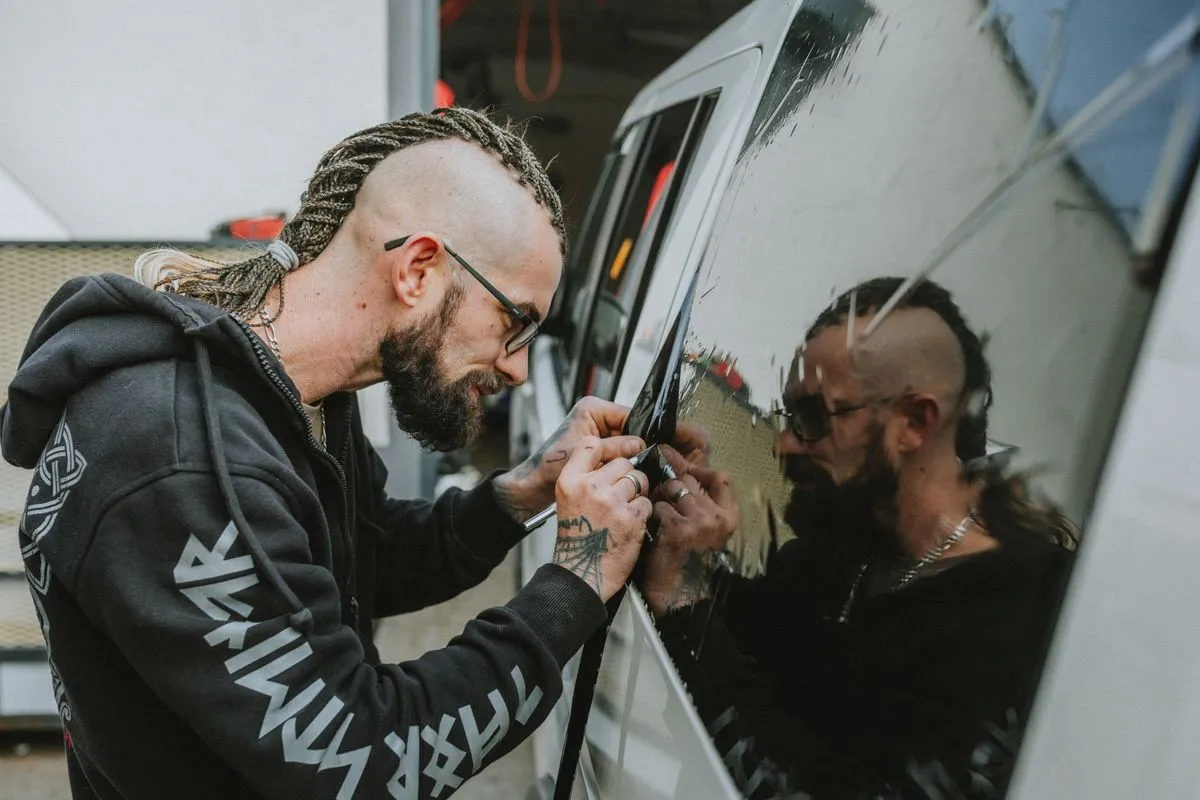
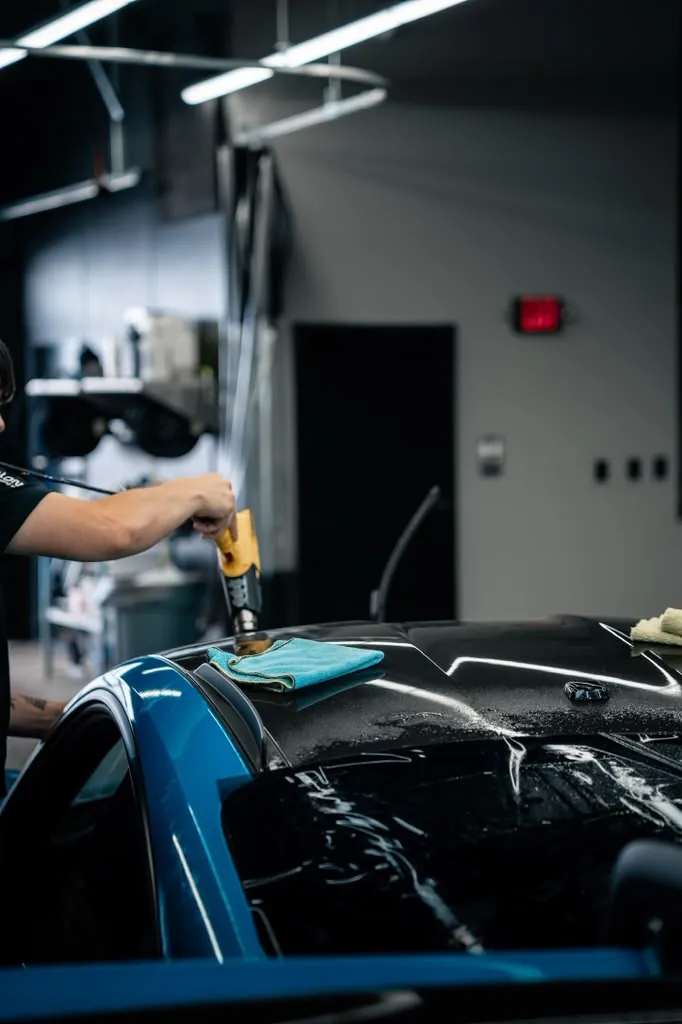
Steam removal lifts the film; adhesive is cleaned panel by panel; rear glass gets the gentle treatment its defroster lines demand. Then new film, computer-cut, fitted in the dust-controlled bay. Most replacement jobs are same-day.
Scraping rear glass destroys defroster lines - turning a tint bill into a glass bill. If budget matters, get the removal quoted professionally first; it’s cheaper than the alternative mistake.
Check your tint like an installer, in daylight, in this order. Stand outside and look for color disagreement: one window browner or purpler than its neighbor means the dye is failing unevenly. Sit inside and look out through the rear windshield at straight lines - a fence or a building edge. Wavy, funhouse distortion means the film’s layers are separating, and that only progresses. Run a fingertip lightly along the top edge of a lowered front window: lifting, roughness or a curling corner is adhesive letting go where hands and seals work hardest.
Next, hunt bubbles properly. Small clusters low on the rear glass or along door edges are failure, not character, and they grow through every hot week. Finally, test the rear defroster on a misty morning: bands that stay fogged can mean the film - or earlier careless removal - has damaged the heating elements. Any single finding from this list justifies a replacement conversation; two or more mean the film is living on borrowed summers. Photograph what you find in daylight so the change over time is undeniable, even to yourself.
Failing tint is not only ugly - it quietly taxes you. Distorted rear film makes night reversing and lane checks genuinely harder, and the worse it gets, the more you compensate without noticing. Bubbles scatter light, purple film has already lost much of its heat rejection, and peeling edges catch on seals and worsen every time the window cycles. There is also a cost curve: film that is merely tired strips cleanly, while film left to bake into full delamination takes longer to remove, and neglected rear glass raises the risk around defroster lines.
Replacing now, with ceramic and a lifetime warranty, ends the cycle permanently - strip, clean, computer-cut, fit, same day in most cases. Replacing later buys nothing except more months of the worst version of the product. The one honest exception is a car you are selling imminently at a price where cosmetics no longer return money; even then, disclose the film’s state rather than letting a buyer discover it. For any car you will keep through another Charleston summer, the math and the mirror both say the same thing: replace it once, properly.
A single failed window can be stripped and re-filmed alone, and with color-stable ceramic the match is clean. The judgement call is age: if one window has failed from age and heat, neighbors fitted the same day are usually close behind. We will show you each window’s condition and let the evidence, not a sales target, decide the scope.
Bubbling and distortion become a visibility problem first - a wavy rear windshield at night in rain is a genuine hazard. Legality turns on light transmission and condition; badly failed film can draw unwanted attention at a stop. Treat advanced bubbling as a safety replacement, not a cosmetic one, and do not wait for it to be judged for you.
Fitted film itself does not damage glass. Removal is where care matters: steam, patience and technique lift film and adhesive without touching the defroster lines on the rear glass. Damage stories come from dry scraping with blades - which is why rear-glass removal belongs to a studio, and why a too-cheap removal quote should worry you.
Key takeaways
Purple, bubbles, peeling, distortion = doneSC heat + UV kill weak film earlyReplacement: steam strip, gentle rear glass, re-tint - same dayNever scrape rear glass yourself (defroster lines)Keep reading
Getting it done locally: see Window Tint in Charleston or Window Tint in Mount Pleasant - same studio standard, priced for your exact car.
Send us the year, make and model - you’ll get an exact quote and the next studio slot.