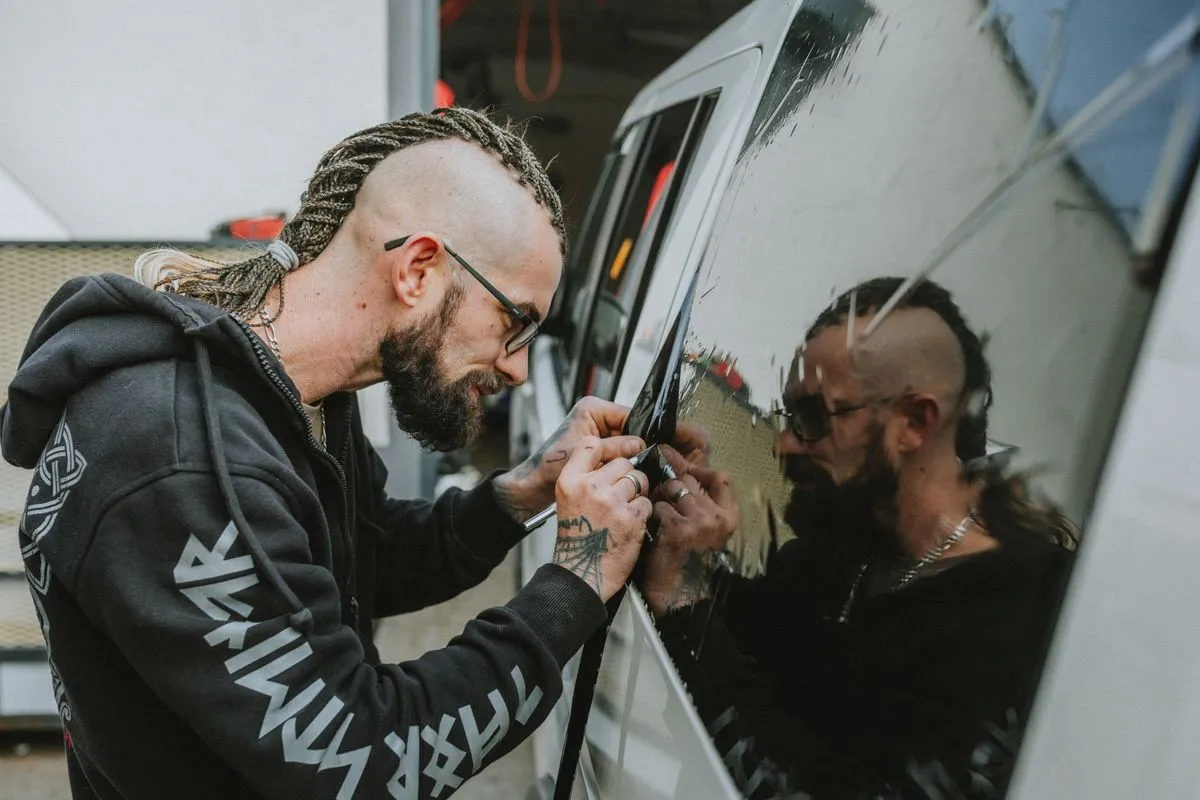
Guide - Window Tint
Ceramic tint rejects far more heat than dyed film at the same legal darkness, never fades or bubbles, and carries a lifetime warranty. Regular dyed tint is cheaper becaus…
The short answer: Ceramic tint rejects far more heat than dyed film at the same legal darkness, never fades or bubbles, and carries a lifetime warranty. Regular dyed tint is cheaper because it does less and lasts 2–4 summers. In Charleston heat, ceramic pays for itself in comfort alone.
In this guide
The heat difference is the storyLongevity and the purple problemSignals and safetyThe price gap, honestlyHow to test the difference before you spendUpgrading in stages without wasting moneyDyed film darkens glass; much of its "shade" is just color, and solar heat pours through. Nano-ceramic film targets infrared - the wavelength that heats the cabin - rejecting the majority of total solar energy while staying at legal, see-out-of-it darkness. Park both cars in August sun and the difference is not subtle.
Dyed film fades to purple and bubbles as its adhesive fails - the signature look of cheap tint everywhere. Ceramic film has no dye to fade and quality adhesives that hold for the life of the car, which is why it carries lifetime warranties and dyed film carries 1–3 years.
Metallic films (the other old upgrade path) interfere with GPS, phones and toll tags. Ceramic contains no metal: full signal, and clearer night vision than dark dyed film of equal heat performance.
Full-vehicle ceramic from $399 vs dyed work that can undercut it by $100–150. Spread over the years the film will serve - and the re-tint the dyed film will need - ceramic is the cheaper decade. Buy once, cry once.
Ask any shop for two things before you decide: a heat demonstration and a written spec sheet. Hold your hand behind a sample of dyed film and then ceramic film under the same heat lamp. With dyed film the warmth arrives almost unchanged, because color alone stops little infrared energy. With ceramic film the heat drops sharply even when the sample looks lighter. That ten-second test explains the whole category better than any brochure.
Then read the numbers for the exact shade you will run, not the darkest shade in the range. Check total solar energy rejection and infrared rejection at that percentage, plus the warranty term in writing. A film advertised on its best shade can perform very differently at a legal 35 percent. If a quote lists no film name, no TSER figure and no warranty length, you are not comparing films - you are comparing prices for unknown products. We write the XPEL film name, shade and lifetime warranty on every quote so the comparison stays honest.
Many Charleston drivers upgrade in stages, and done in the right order it wastes nothing. Start with ceramic on the front two windows, where you sit, where the steering wheel bakes and where night visibility matters most. If the rear glass already carries cheap dyed film that still looks sound, it can stay for a season while you judge the difference from the driver’s seat. Most drivers come back within one summer to finish the car.
The mistake is mixing in the opposite order: cheap film up front to save money, ceramic only on the rears. You then live daily with the weakest film, suffer the worst heat where it matters and eventually pay removal on the newest-feeling glass. Another false economy is choosing a darker dyed film to chase heat rejection. Darkness adds glare-free privacy, not meaningful infrared control, and it costs you night vision on unlit Lowcountry roads. Put the technology where your body sits first, match shades second and let the rears follow when budget allows - every dollar then stays in the final result.
From outside, quality ceramic and dyed film at the same percentage look very similar - dark, clean glass with no purple cast. From inside, ceramic usually looks clearer and slightly less smoky, especially at night. The visible difference appears years later, when dyed film fades and ceramic still looks freshly fitted.
Carbon sits genuinely in the middle: better fade resistance and heat rejection than dyed film, with a lifespan around five to eight years, but it cannot match ceramic infrared rejection or lifetime cover. It suits a car you will keep only a few years. For a keeper, ceramic’s longer life usually wins on cost per year.
No - stacking film over old film traps imperfections, doubles edge thickness and voids clean adhesion, so the old layer must be stripped first. Removal adds one to two hours depending on condition. Once the glass is bare and cleaned, ceramic goes down exactly as it would on a brand-new car, with the full lifetime warranty.
Key takeaways
Ceramic targets infrared heat; dyed film mostly adds colorPurple fade and bubbles are dyed-film signatures - ceramic doesn’tMetal-free: no GPS, phone or toll-tag interferenceLifetime warranty vs 1–3 years: ceramic is cheaper per yearKeep reading
Getting it done locally: see Window Tint in Charleston or Window Tint in Mount Pleasant - same studio standard, priced for your exact car.
Send us the year, make and model - you’ll get an exact quote and the next studio slot.