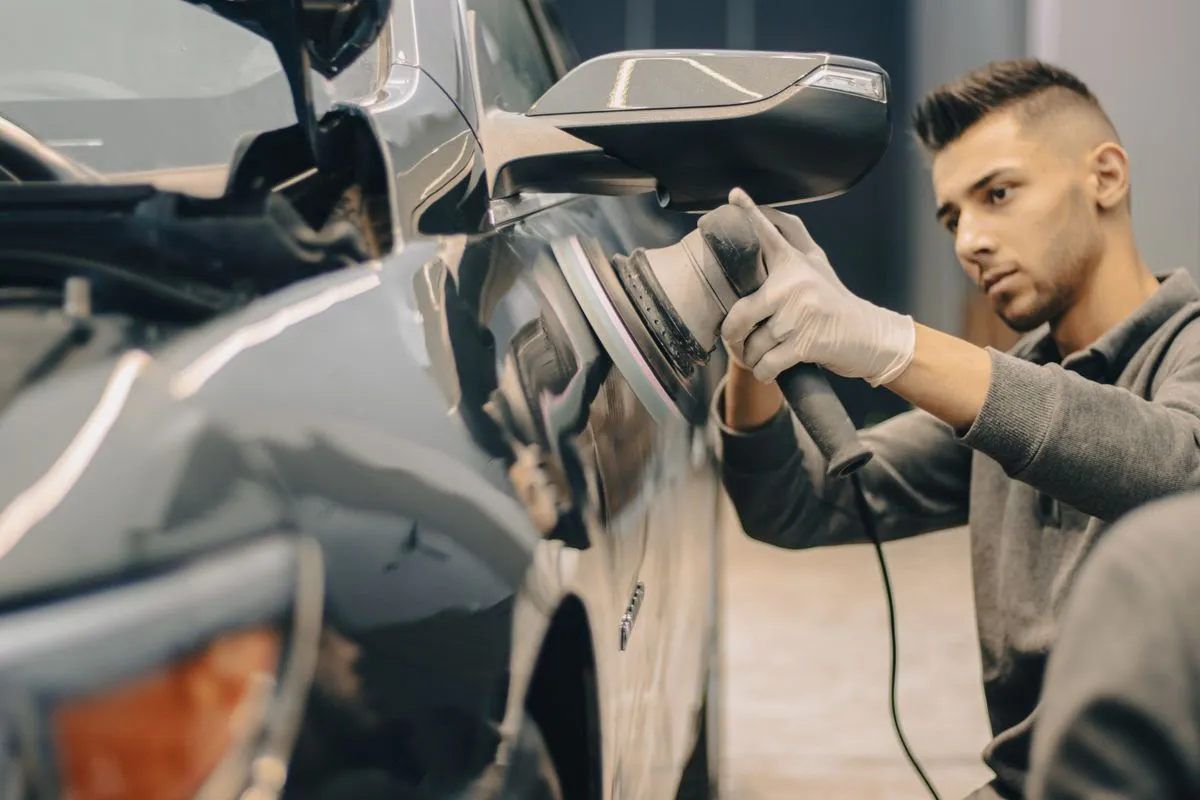
Guide - Paint Correction
There’s no fixed count - clear coat is a budget of microns, and each correction spends a few. With conservative, measured work, most cars can be corrected several times o…
The short answer: There’s no fixed count - clear coat is a budget of microns, and each correction spends a few. With conservative, measured work, most cars can be corrected several times over a lifetime; with aggressive annual "full corrections," the budget can be spent alarmingly fast.
In this guide
The clear coat budgetHow professionals protect itWhy coating extends the budgetThe red flagsWhich panels spend the budget firstMaking one correction last instead of booking threeFactory clear coat is roughly 30–50 microns on most cars. A careful correction removes perhaps 1–3 microns; an aggressive one far more. Edges and peaks are thinnest. Think of it as a bank account: small, planned withdrawals for decades, or a few big ones and done.
Least-aggressive-first method selection, test panels, avoiding unnecessary stages, and special care at edges and body lines. A corrector who talks about preservation is a corrector who can be trusted with the second and third correction too.
A coated car needs correction far less often - swirls form slower and wash damage drops. Many clients correct once, coat, and maintain - spending the clear coat budget once instead of repeatedly.
A detailer selling annual full corrections, or correcting without any paint assessment, is spending your budget for their revenue. Ask what a job will remove and why it’s needed - the answer should be specific to your panels.
Clear coat is not spread evenly across a car, and correction budgets are not spent evenly either. Edges, swage lines, door handles surrounds and the raised center of a hood carry thinner paint and catch more contact, so they approach their limit sooner than large flat door centers. The roof and hood also collect the most UV and the most wash damage, meaning they are usually the panels owners want corrected most often. A responsible corrector works these areas with lighter pressure, smaller machines and sometimes by hand, and will refuse to chase a defect sitting on a thin edge.
Repainted panels reset the math entirely - their thickness and hardness are unknown until assessed, and some repaints have surprisingly little clear to work with. This is why we ask about repair history at booking and treat unknown panels cautiously. Keeping a simple record helps: note the date, level and studio for each correction your car receives. That history, handed to the next corrector or the next owner, is genuine protection against someone spending the last of your clear coat unknowingly.
The owners who correct least often are not the ones who drive least - they are the ones who changed what happens between corrections. The two-bucket wash with grit guards, plush mitts washed after use, no brush tunnels, no dry wiping and prompt drying after rain or sprinkler hits: this unglamorous list is what stretches a correction from one year to five. Add XPEL Fusion Plus coating and the interval stretches further, because the coating absorbs the chemical exposure and light wash contact that would otherwise mark the clear coat itself.
There is also a smarter middle setting many clients miss: a light enhancement from $499 refreshes gloss and removes fresh, shallow marks while spending far less clear coat than a full two-step. Alternating - one proper correction, then gentle enhancements only when the eye actually notices decline - keeps a car looking sharp for a decade without ever making a large withdrawal. If a studio pushes a full correction at every visit, ask what the last one left to remove. The answer should be specific, panel by panel, or the booking is for their diary, not your paint.
We assess paint on a test panel, treat edges and repainted panels conservatively, and choose the least aggressive method that reaches the result. If a panel responds poorly or looks thin, we stop and discuss it rather than pushing on. The goal is a result you can repeat for years, not a one-time shine bought with the panel’s remaining life.
No - the levels spend differently. A 1-step enhancement removes a minimal amount of clear coat, far less than an aggressive multi-stage correction chasing deep defects. Think in microns, not visits: several enhancements across a car’s life can total less removal than one heavy correction. That is why studios match the level to the defects instead of defaulting to work.
In most cases, yes - a corrected car retains plenty of clear coat, which is 30–50 microns from the factory and loses about 1–3 microns per correction. The risk is a history of repeated cutting, which is unknowable from looks. We start with a test panel, proceed least-aggressive first, and will tell you if any panel should be left alone.
Key takeaways
No fixed count - microns are the budget (clear ≈30–50µm)Careful correction spends 1–3µm; aggressive spends far moreCoating stretches the budget: correct once, maintainBeware annual "full correction" sales pitchesKeep reading
Getting it done locally: see Paint Correction in Charleston or Paint Correction in Mount Pleasant - same studio standard, priced for your exact car.
Send us the year, make and model - you’ll get an exact quote and the next studio slot.