Guide - Paint Correction
Standard correction does not remove orange peel - it’s a texture in the paint’s application, not a defect on its surface. Removing peel means wet-sanding (levelling) the …
The short answer: Standard correction does not remove orange peel - it’s a texture in the paint’s application, not a defect on its surface. Removing peel means wet-sanding (levelling) the clear coat: a specialist, higher-risk process quoted separately and honestly.
In this guide
What orange peel isWhy sanding is differentWho it’s forOur honest defaultHow to judge orange peel on your own carImproving reflections without sanding: the honest alternativesModern factory paint dries with a fine dimpled texture - visible as a slightly wavy reflection. It’s normal, universal on production cars, and only absent on show cars and high-end refinishing. Correction polishes the tops of the texture; it doesn’t level it.
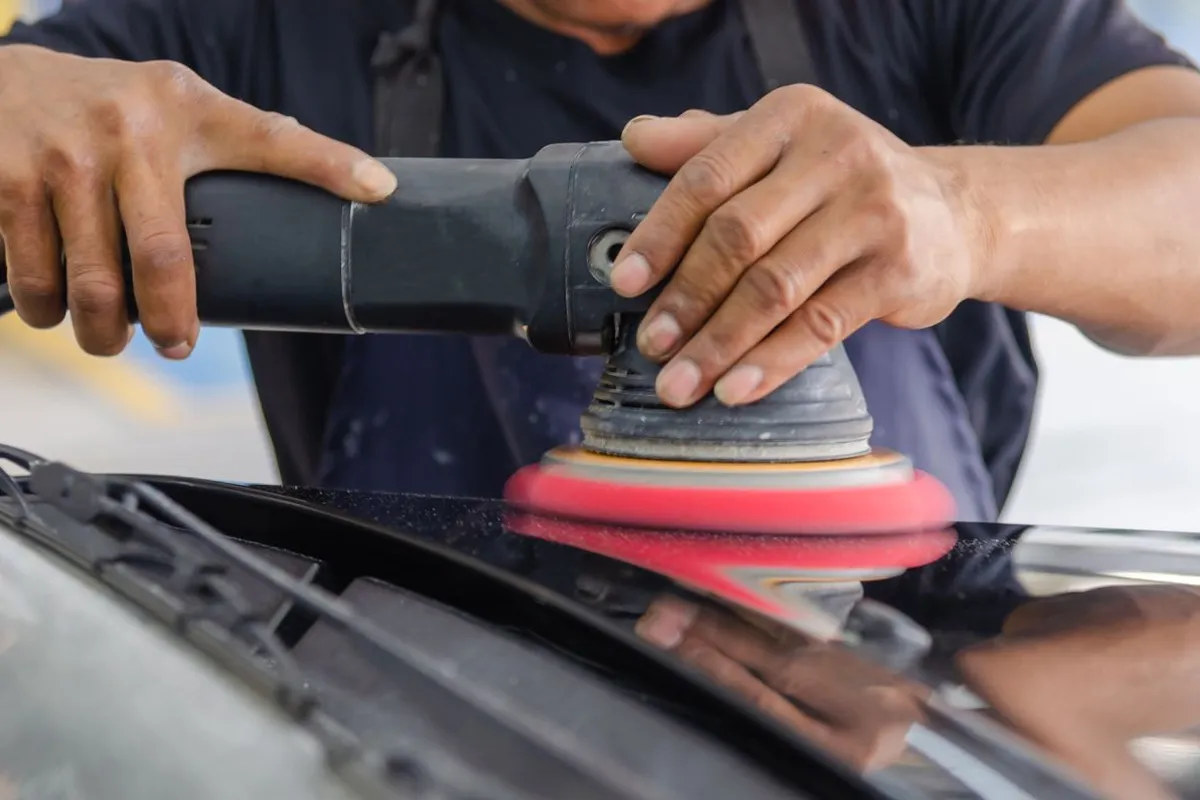
Wet-sanding with fine abrasives physically flattens the texture, then correction restores gloss to the levelled surface. The result is a mirror-flat reflection - and a significantly thinner clear coat. It spends the paint’s budget at a rate polishing never does.
Show cars, concours preparation, magazine features - cars whose reflections are the point. For daily drivers it’s almost never the right spend: the peel returns visually nowhere (it’s gone), but the risk and cost are real, and one future correction may no longer be possible.
We correct, we don’t sand, unless the car and the goal genuinely call for it - and we’ll walk you through the paint-thickness math before anyone commits. Flat reflections are beautiful; sufficient clear coat is forever.
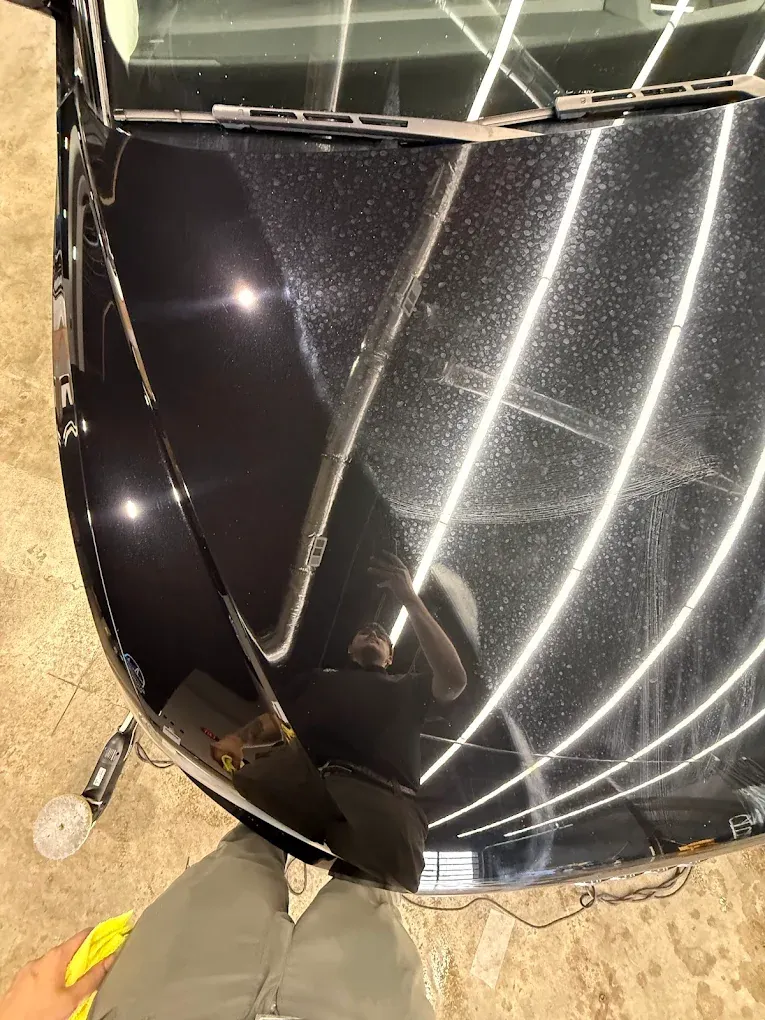
Stand a few feet from a clean, dry panel in good light and look at a reflected straight edge - a window frame, a light strip, the line of a building. On a car with typical factory peel, that reflection wobbles and looks slightly soft, like print viewed through textured glass. On a levelled, show-prepared car the same reflection is crisp and undistorted. Compare panels as you walk the car: factory peel is usually consistent, while a repainted panel often shows noticeably heavier or different texture - one of the easiest ways to spot past repair work when buying a used car.
Also separate peel from its imitators. Dry, rough-feeling overspray, heavy dust nibs and failing clear coat can all roughen a reflection but are different problems with different fixes, some of them correctable. If reflections look wavy but the paint feels smooth and glossy, you are almost certainly looking at ordinary peel - normal on production cars from every mainstream maker. It is a cosmetic texture, not damage, and no buyer, valuer or judge outside the show world will ever mark your car down for having it.
If mirror-flat reflections are what you love, there is a middle route that stops well short of wet-sanding. A full multi-step correction sharpens reflections considerably - not by levelling the peel, but by removing every swirl, haze and water spot sitting on top of it. Defects scatter far more light than the peel itself does, so a corrected, un-sanded car reflects dramatically better than the same car uncorrected. Owners chasing the look are often satisfied at this stage once they see the test panel, at a fraction of sanding’s cost and none of its clear-coat spend.
Coating adds the final optical lift: XPEL Fusion Plus deepens gloss and makes the surface read darker and wetter, which the eye interprets as sharpness. If, after seeing all that, you still want true levelling, we will have the full conversation - thickness, risk, cost, and the fact that the car’s correction budget afterwards is largely spent - before anyone commits. That order matters: reversible, conservative steps first, the irreversible one only with eyes open and a show goal that justifies it.
In practice, no. Orange peel within normal range is a characteristic of factory paint, not a fault, and every volume manufacturer’s cars carry it. A panel with extreme texture after a repair is a conversation with the repairer. For standard peel, the choices are living with it, improving reflections through correction, or specialist wet-sanding, in that order.
Yes, which is why it is quoted separately. Sanding removes clear coat faster than polishing, and going too deep - on edges and peaks - can cut to the color layer, needing paint. It consumes future corrections’ reserve. On a show car, with measured paint, the result is stunning. On a daily driver it is risk without reward.
Because peel comes from how production paint is sprayed and cured at factory speed, not from the badge. Even premium brands deliver it; only hand-finished programmes and top repaints are levelled flat. Many luxury owners book correction for this reason - not to sand, but to remove the defects layered over the peel so the finish looks the part.
Key takeaways
Orange peel = application texture, not surface defectPolishing can’t level it; wet-sanding can - at a costSanding spends clear coat fast: show cars onlyOur default: correct, don’t sand, unless the goal demands itKeep reading
Getting it done locally: see Paint Correction in Charleston or Paint Correction in Mount Pleasant - same studio standard, priced for your exact car.
Send us the year, make and model - you’ll get an exact quote and the next studio slot.