Guide - Paint Correction
The words are used interchangeably in ads but mean different work. Correction is staged, measured defect removal. Polishing is one step of it. "Buffing" usually means a f…
The short answer: The words are used interchangeably in ads but mean different work. Correction is staged, measured defect removal. Polishing is one step of it. "Buffing" usually means a fast gloss pass - often with fillers - that fades in weeks. Price follows the definition, so learn it before you buy.
In this guide
The vocabulary, honestlyThe filler trickHow to interrogate a quoteWhat we sellThe tools and products behind the wordsRed flags to listen for when you get quotesPolishing: machine work with an abrasive polish - the mechanism of correction. Correction: the discipline - inspection, test panel, staged passes, verification under light. Buffing: the colloquial term, and in cheap quotes, a single quick pass with a glaze that fills defects temporarily.
Glazes and filler-heavy products fill swirls with oils that catch light like paint does - for days to weeks. Then the wash takes them and the swirls "come back." They never left. If a deal sounds like correction at a third of correction’s price, it’s this.
Ask: how many stages? Test panel? What defect percentage are you targeting? Fillers or abrasives? The answers - or the discomfort - tell you everything.
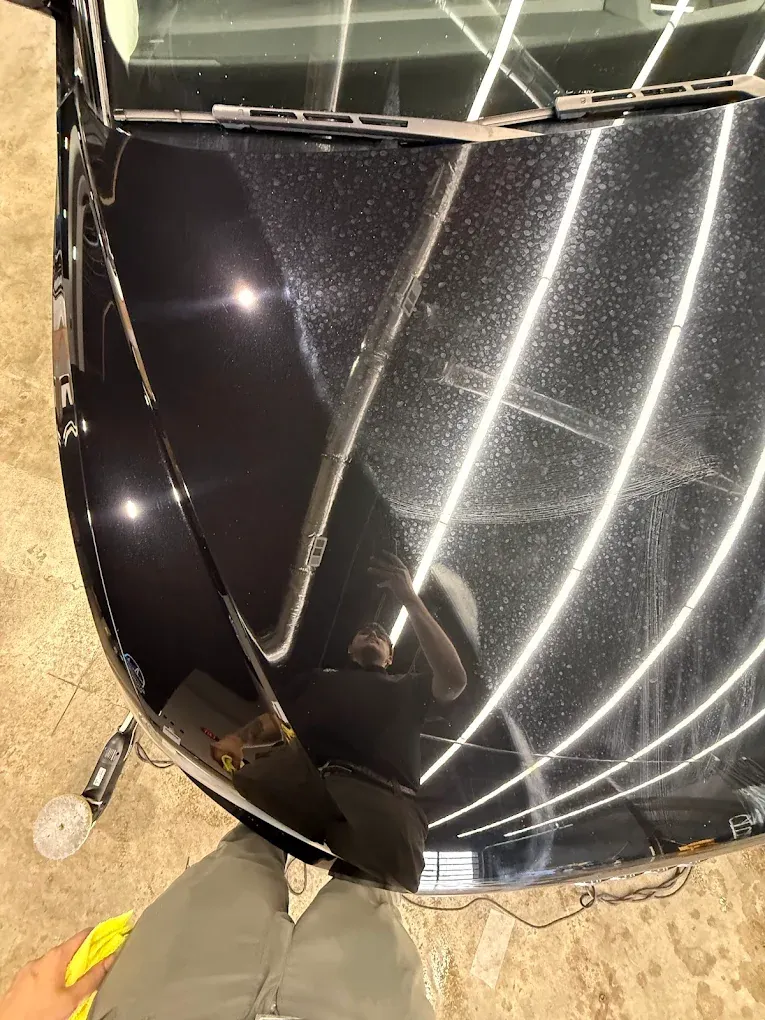
Correction, by the definitions above: test panel, staged abrasive work, verified under correction lighting, then protection. It costs what it costs because it takes what it takes.
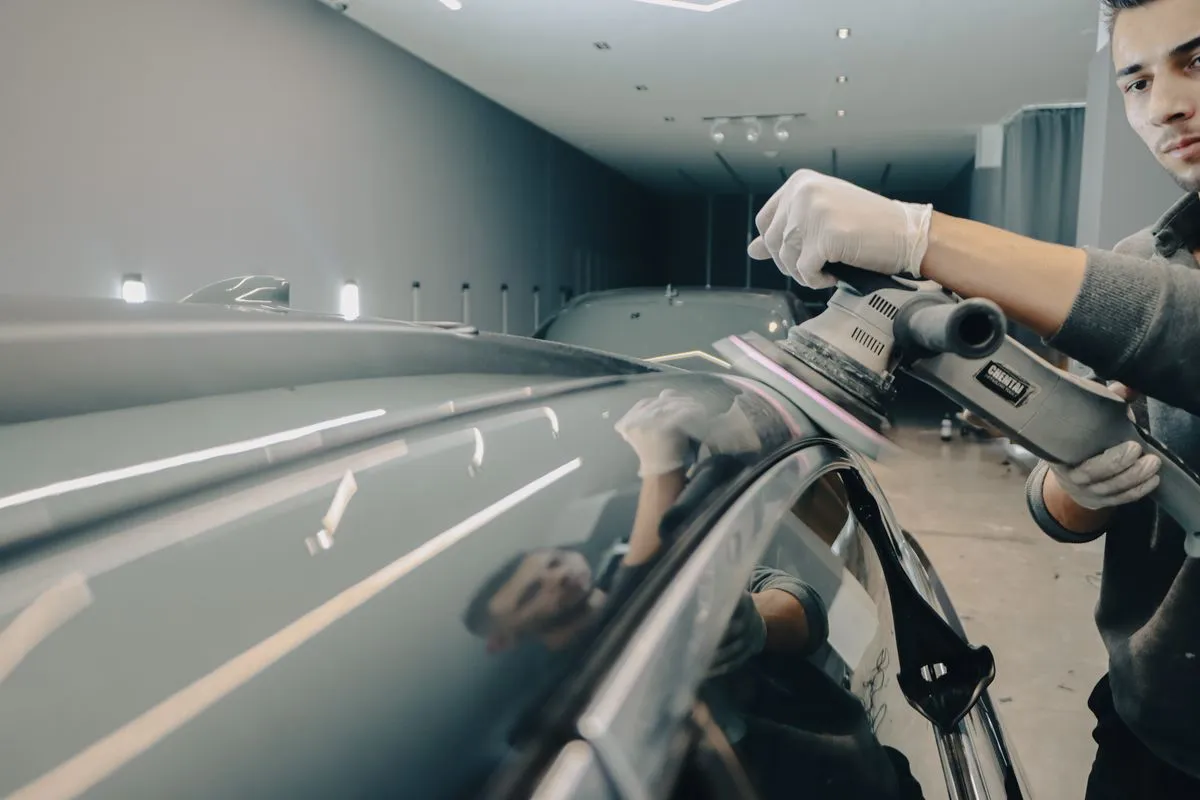
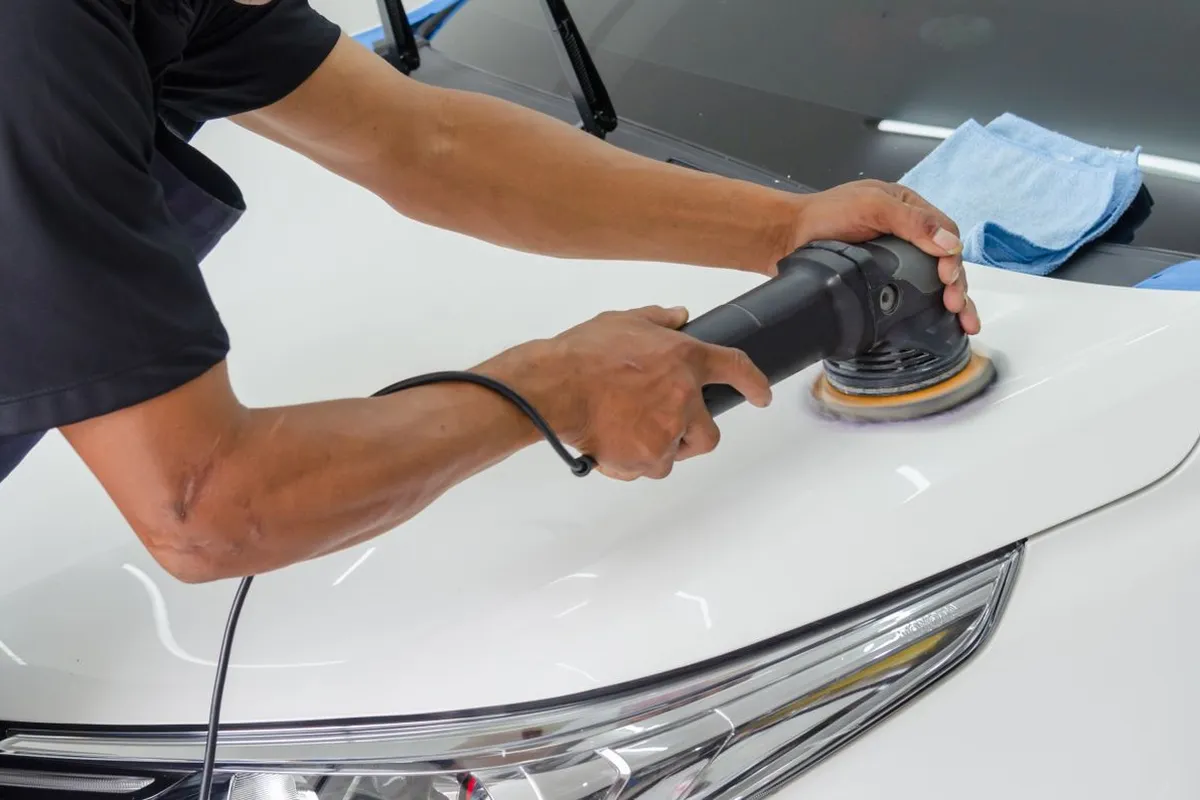
The vocabulary makes more sense when you see the kit. Correction uses a dual-action or rotary machine, a range of foam and microfiber pads from cutting to ultra-fine, and abrasive compounds graded like sandpaper - heavy cut through to finishing polish. Each combination is chosen for your paint on the test panel, worked in small sections, then wiped and inspected before moving on. Paint thickness awareness, panel temperature and lighting checks are part of every stage. It is slow, methodical work, which is why a proper two-step takes two days.
A quick buff, by contrast, usually means one pad, one all-in-one product heavy with fillers and waxes, and a fast pass over the whole car. The panel looks glossy because the product is glossy, not because the defects have gone. Neither approach is a secret - but they are different products at different prices. When you book at Illustrious Auto Boutique, the stage count, the products’ role and the defect target are stated up front, so the word on the invoice matches the work on the car.
Be cautious when a seller cannot answer simple questions without changing the subject. How many stages are included? Is there a test panel? What percentage of defects are you targeting? Are fillers involved? How long will the car be with you? A genuine corrector answers all five in seconds, because they are the job. Vague answers - trust me, showroom shine, full detail special - usually mean a wash, a glaze and a spray wax at correction money.
Price itself is a clue. Our 1-step enhancement starts at $499 and a 2-step at $899, reflecting a full day or two days of machine work. A full correction offered at a fraction of that, finished the same afternoon, is not a bargain version of the same thing; it is a different, shorter service wearing the same name. Also be wary of anyone who guarantees 100% defect removal without seeing the car - no honest corrector promises that, because scratch depth and clear-coat thickness decide what is safely possible, panel by panel.
The mechanism is similar - an abrasive polish worked by machine - but the result depends on lighting, pad and compound selection, and knowing when to stop. Home polishing with a single all-in-one product is closest to a light enhancement. Without a test panel and lights it is easy to under-correct, or chase one spot and thin it.
Almost certainly fillers. Glazes and filler-heavy polishes fill swirls with oils that reflect light like flat paint, so the car looks corrected at collection. Washing gradually strips those oils and the original defects reappear, unchanged underneath. Nothing went wrong afterwards - the defects were never removed. True abrasive correction does not fade, because the clear coat itself was levelled.
Look for the stages, the defect-removal target - for example 60–70% for a 1-step or 85–95% for a 2-step - whether a test panel is included, what protection is applied, and how many days the car is booked for. If those five points are missing, ask for them before paying a deposit. Call 843-410-3040 and we will walk through ours.
Key takeaways
Correction = staged + measured; polishing = its mechanism; buffing = usually a glaze passFillers hide swirls for weeks; abrasives remove themInterrogate: stages? test panel? target? fillers?Price follows the definition - learn it firstKeep reading
Getting it done locally: see Paint Correction in Charleston or Paint Correction in Mount Pleasant - same studio standard, priced for your exact car.
Send us the year, make and model - you’ll get an exact quote and the next studio slot.