Guide - Ceramic Coating
Because a coating preserves whatever is underneath it - including swirls, water spots and oxidation - for years. Correction is not an upsell before coating; it is the ste…
The short answer: Because a coating preserves whatever is underneath it - including swirls, water spots and oxidation - for years. Correction is not an upsell before coating; it is the step that creates the result the coating then locks in.
In this guide
Sealed in means sealed inWhat correction actually contributesChoosing the correction levelThe quote testInside a Test Panel: How Your Correction Level Is ChosenWhat Correction Cannot Fix - and What We Do InsteadA coating is a semi-permanent layer. Apply it over a swirled finish and you’ve made the swirls semi-permanent too - removing them later means polishing the coating off first. Every shortcut taken before application is archived on the car for the warranty’s whole life.
Gloss is not something a coating adds much of - it’s something correction creates and coating protects. The deep reflection people associate with "ceramic" is polished paint. The coating’s jobs are protection, hydrophobics and easy washing. Credit where due: the polisher, not the bottle.
New or well-kept car: a 1-step enhancement usually suffices. Daily driver with wash swirls: 2-step. Black or show-bound: multi-step. We decide with a test panel under correction lighting - you see the result level before the full quote, not after.
Any coating quote that doesn’t mention correction should be one line long: no. Ask "what correction is included?" - the answer separates installers from applicators instantly.
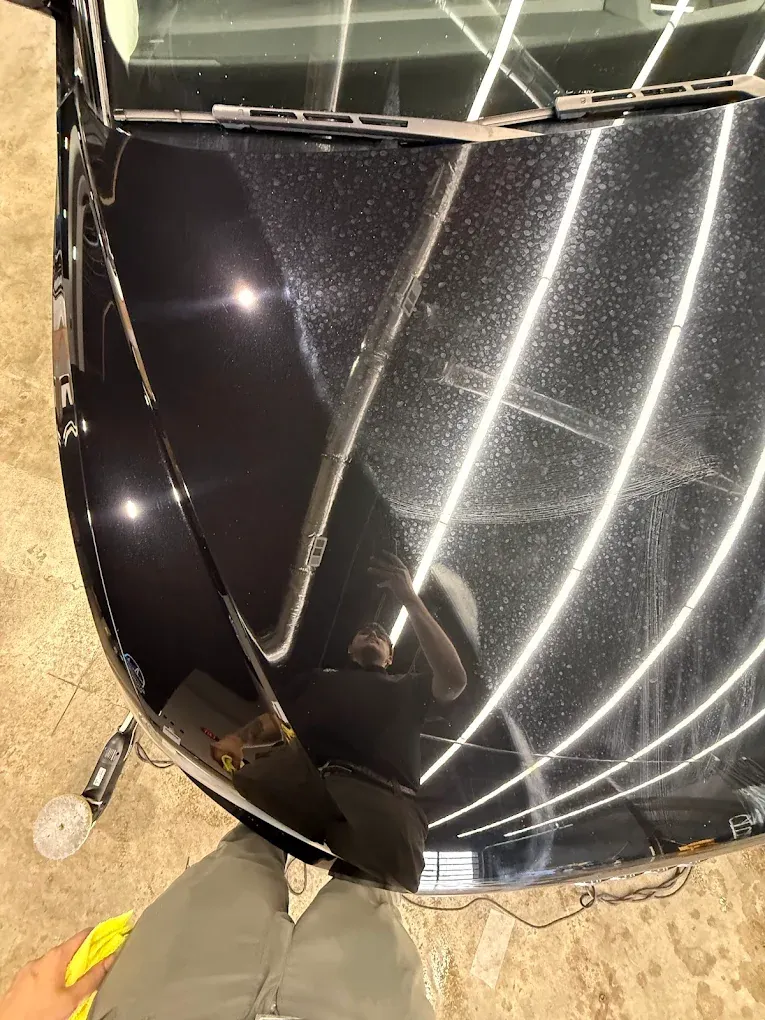
A test panel is a single square of paint - usually on a door or the hood - taken through the proposed correction process while the rest of the car waits untouched. We begin by measuring and inspecting under correction lighting, which reveals the true swirl pattern that daylight hides. Then a pad and polish combination is worked on that panel, wiped down and inspected again, because polishing oils can temporarily fill marks and flatter the result.
If one pass leaves defects the owner can see and cares about, the combination steps up: a cutting stage to level the marks, then a refining stage to restore clarity. If one pass achieves the goal, nobody sells you the second. The test panel settles three things before a full quote is confirmed - the achievable finish, the hours involved, and the honest limits on that particular paint. It also protects you from the opposite failure: over-polishing. Clear coat is finite, and a professional removes the least material that achieves the result. Ask any installer to show you a test panel. The request costs them twenty minutes and tells you everything about how they work.
Honesty about limits is part of the craft. Correction removes defects in the surface of the clear coat: swirls, light scratches, water-spot etching and oxidation. It cannot replace missing material. A stone chip that has gone through to primer, a scratch you can catch a fingernail in, or clear coat that is peeling and failing - none of these polish away, and coating over them does not disguise them for long.
The correct handling varies. Chips are cleaned and touched in before film or coating, so they are sealed and far less visible, even if a close inspection can still find them. Deep scratches may be improved by careful local work but are quoted as improvement, never invisibility. Failing clear coat is a paint-shop conversation, and we will say so rather than coat a panel that will continue to peel underneath. This matters most at buying time: an installer who lists what correction cannot do, on your car, before taking a deposit, is giving you the same honesty you will need when the car is under the lights and decisions cost money.
Proper correction removes a tiny fraction of the clear coat - far less than the depth of the defects being levelled - and a professional works with the least aggressive combination that achieves the result, verified on a test panel. The risk comes from repeated, careless compounding over years, not from one measured correction before a coating.
A lighter version, almost always. New cars arrive with transport residue, rail dust and frequently swirls from delivery washes, all visible under correction lighting. Most new cars need a one-step enhancement rather than a two-step correction - but skipping inspection entirely means coating over whatever the delivery process left on the paint for the next 4 to 8 years.
You can, but think about the result carefully. Partial correction leaves a visible difference between corrected and uncorrected panels once the car is under strong light, and the uncorrected panels are then sealed under the same long-life coating. Most owners who consider it choose a uniform one-step enhancement instead - consistent finish, sensible cost, nothing regretted later.
Key takeaways
Coating preserves what’s under it - swirls includedGloss comes from correction; coating protects itLevel is set by a test panel, not a guessNo correction in the quote = no proper coatingKeep reading
Getting it done locally: see Ceramic Coating in Charleston or Ceramic Coating in Mount Pleasant - same studio standard, priced for your exact car.
Send us the year, make and model - you’ll get an exact quote and the next studio slot.